The Work we do
Why We Do This
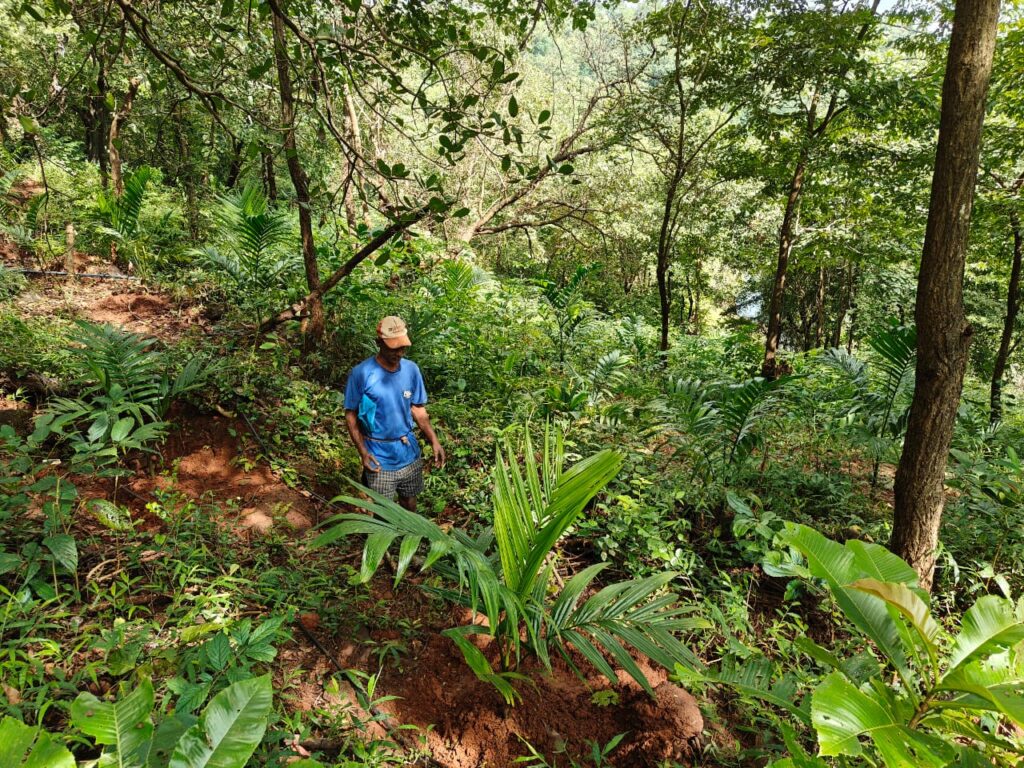
Chirakvan is our attempt to earn a living through sustainable and ecological farming practices.
“Our vision is to grow a self-sustaining food and medicinal forest with minimal disturbance, preserving the biodiversity — serving as a practical model for others to adopt ensuring monoculture slowly makes space for more diverse, resilient systems.”
The Region Around Us
The Konkan region of Maharashtra is well known for its beaches and scenic monsoon drives—but its real heart is in the hills, rivers, mangroves, and forests that breathe life into the villages here. For generations, people here have lived minimally with the land — fishing, foraging, farming small patches.
What’s not known is the scarcity and struggle for water post monsoon and the challenge of farming on steep resource poor hills. Many families, unable to sustain themselves from farming, resort to selling parts of their ancestral land or leave their farms behind, choosing to migrate to cities.
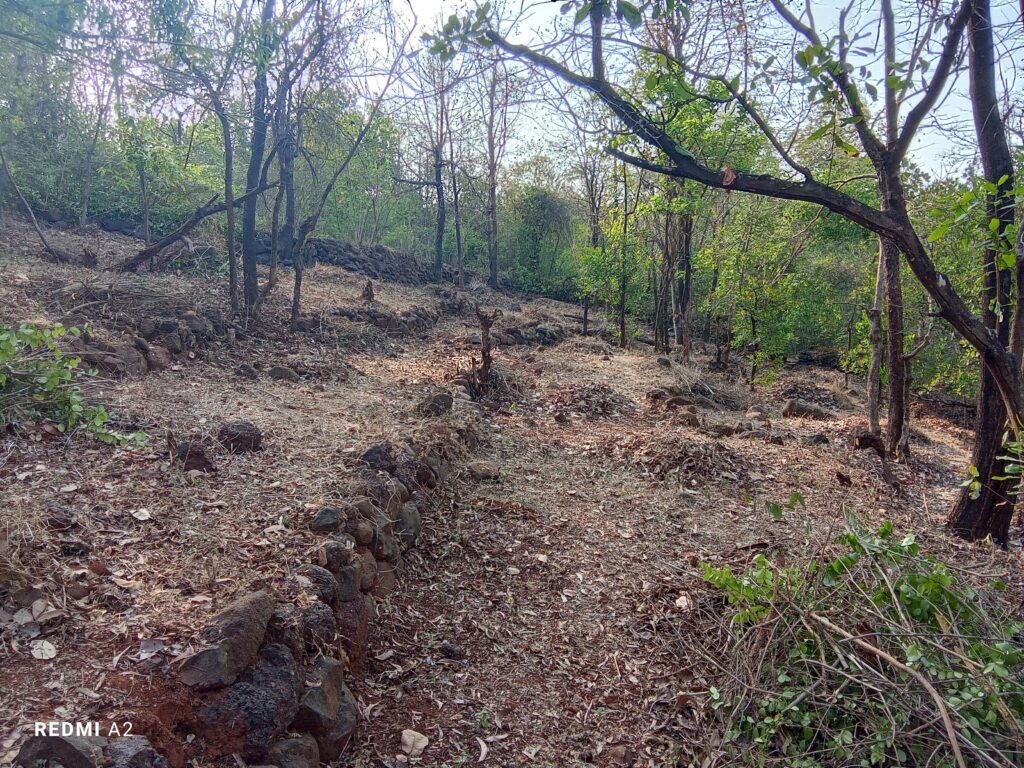
Nature has reclaimed, what people left behind. Abandoned farms turned into thriving forests — home to native trees and wildlife including big cats – but this paradise is fragile.
As the land changes hands, forests are being chopped down, hills bulldozed into accessible plateaus, and diverse ecosystems replaced with monoculture plantations. In the race for survival and sustenance, new plantations, and development, these forests risk being cut again—this time without the promise of coming back.
Farming Difficulties
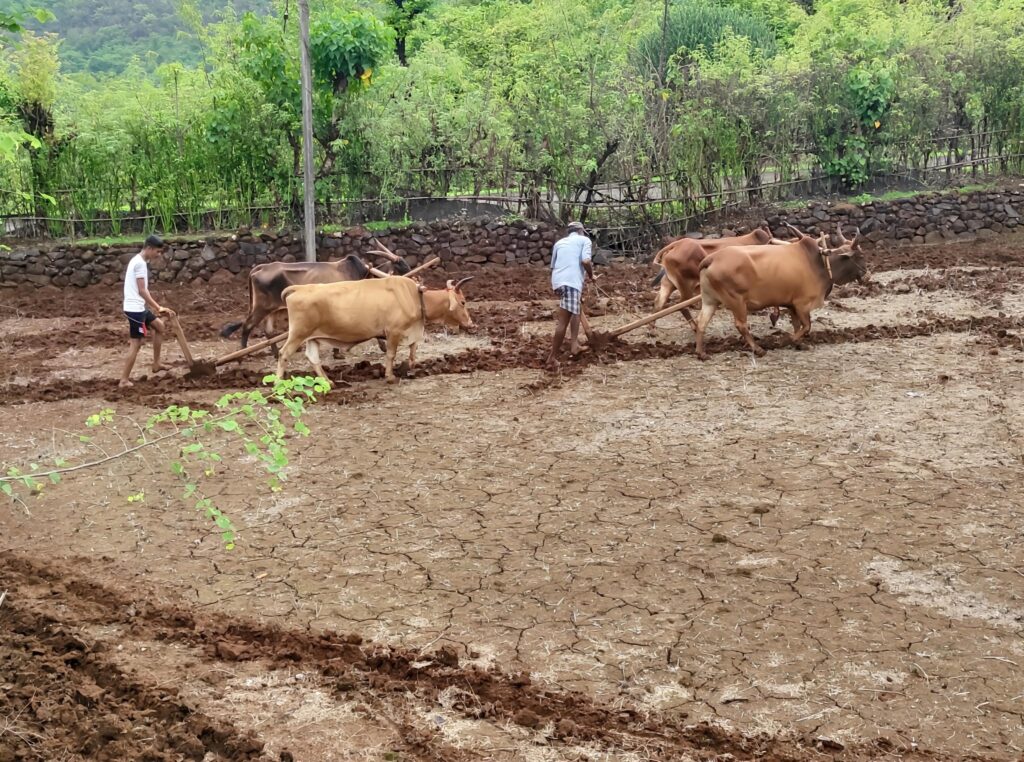
Farming in the hilly Konkan is a constant struggle.
- The land is uneven and rocky, with steep slopes.
- Soil is infertile, highly acidic, and badly eroded.
- The climate swings between heavy rain and long dry spells.
- Proper irrigation facilities are lacking.
- Yields are uncertain and often too small to exceed household needs.
- Many fields cannot be reached by road or farm machinery.
- Farmers lack capital to hire labour or even small machines to reduce the workload.
- Crops face constant threats from wildlife—monkeys in the day and wild boars in the night— a major reason for abandoning of farms.
It’s a familiar story across our and neighbouring villages. Many families still own 20–40 acres, yet can no longer farm it themselves, turning instead to daily-wage work or migrating to cities in search of steadier income.
Progress so far …
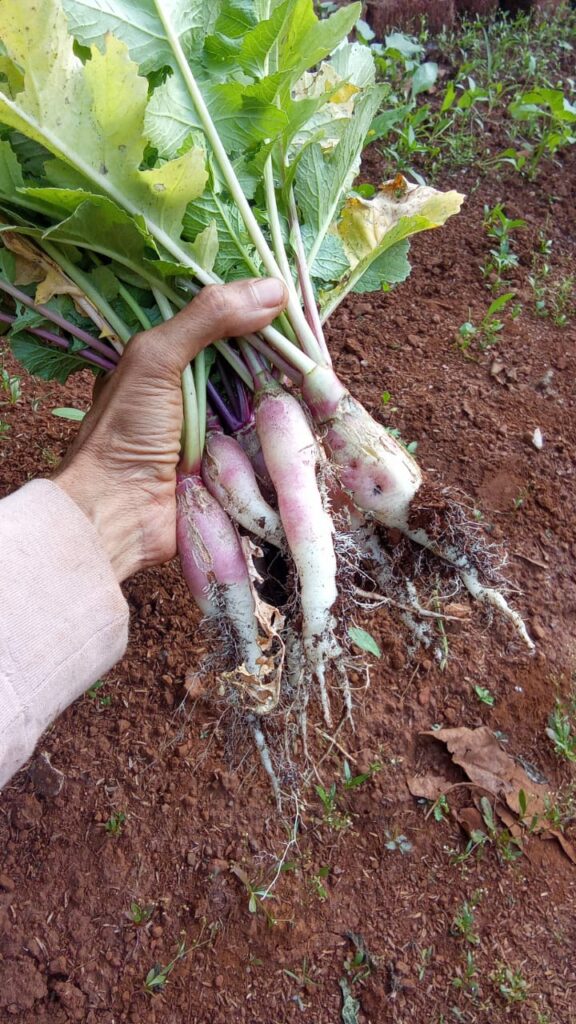
We follow agroecology, permaculture, and local traditional wisdom to grow over 80 species (and keep adding more every year) of grasses, plants, and trees — while some areas left untouched, thriving as they are. Two rainwater ponds, solar pumps connected with drip irrigation system help us through the drier months.
Invasive species like Australian Acacia and Lantana remain a challenge. We try to control them while ensuring native trees continue to flourish. Some trees are used for timber, firewood, or as natural supports for our vegetables.
Minimal disturbance to what already exists comes as a priority.
